 EN/
EN/ Romana
At a glance
- Wellness is a multidimensional concept that includes physical, mental, emotional, social and environmental aspects.
- A spa focuses on wellness through professional services and experiences designed for the body, mind and overall well-being.
- A wellness club can combine fitness, relaxation, recovery and other wellness services in one location.
- Atmosphere matters: lighting, temperature, materials, music and ambient fragrance all contribute to how a space is perceived.
- For hotels, spas, clinics, showrooms or reception areas, a professional air freshener can help distribute ambient fragrance according to the size of the space and the desired intensity.
What does premium wellness mean?
Premium wellness goes beyond access to a space with relaxation services. It is an approach to well-being built around quality services, comfort, thoughtful design and attention to detail. A premium wellness experience can include spa treatments, fitness, relaxation, recovery, water facilities, nutrition and carefully designed sensory elements.The Global Wellness Institute defines wellness as an active process associated with choices and lifestyles that contribute to overall well-being. The concept is multidimensional and includes physical, mental, emotional, spiritual, social and environmental aspects. (Global Wellness Institute)
In a premium wellness environment, these elements should work together. An impressive interior can lose part of its impact if the atmosphere is affected by an unpleasant smell, inappropriate music or uncomfortable temperatures.
This is where ambient fragrance can become part of the identity of a space. A subtle, well-chosen scent can complement the atmosphere without competing with other sensory elements.
What is the difference between spa and wellness?
Spa and wellness are closely related concepts, but they are not identical. Wellness is the broader concept, associated with overall well-being and lifestyle choices, while a spa is a type of space or service where this philosophy is expressed through treatments and experiences focused on relaxation and personal care.The Global Wellness Institute defines spas as establishments that promote wellness through professional and therapeutic services aimed at renewing the body, mind and spirit. Depending on the type of spa, services may include massages, facial and body treatments, beauty services, water-based treatments and other specialized experiences.
Wellness spa vs. wellness & spa
A wellness spa generally focuses on relaxation, recovery and personal care. By comparison, wellness & spa can describe a broader concept that also includes fitness, nutrition, physical activities, swimming pools, saunas and other facilities.There is no single universal definition separating the two concepts. The exact services depend on the location, business model and market.
For the customer, what matters most is how these elements come together to create a coherent experience.
What does a modern wellness club look like?
A wellness club can combine several services in one location, including fitness, recovery, relaxation, swimming pools, saunas, therapies and personal care. Unlike a spa focused primarily on treatments, a wellness club can be designed for regular use and for integrating wellness into everyday life.
For a wellness club, the customer experience starts before the actual treatment. The reception, changing rooms, fitness area, relaxation zone and common spaces all contribute to the same overall impression.
An ambient fragrance can help reinforce this experience. In commercial environments, a professional air freshener can distribute fragrance throughout a space in a more controlled way, instead of relying on individual air fresheners placed in separate areas.
What elements matter in a premium wellness environment?
| Element | Role in the experience |
| Lighting | Creates atmosphere and influences how the space is perceived |
| Temperature | Contributes directly to comfort |
| Music | Complements the atmosphere and pace of the experience |
| Materials | Support the visual and tactile identity of the space |
| Ambient fragrance | Adds a sensory dimension and can support the identity of the space |
| Professional equipment | Allows more controlled fragrance distribution |
| Cleanliness | Essential for comfort and the perception of quality |
| Services | Shape the customer's direct experience |
Why does ambient fragrance matter in wellness?
Scent is an important part of the sensory experience. In a wellness environment, ambient fragrance should complement the atmosphere rather than dominate it. Choosing the right scent depends on the size of the space, the type of activity, the desired intensity and the overall profile of the location.For a hotel, spa, clinic, gym or reception area, ambient fragrance can be distributed through a professional air freshener that allows greater control over intensity and operating intervals. This can provide a more consistent experience than using multiple individual air fresheners.
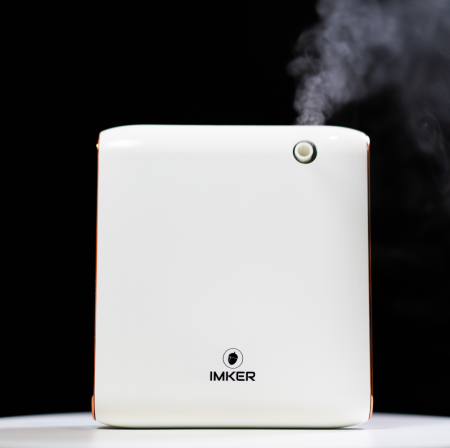
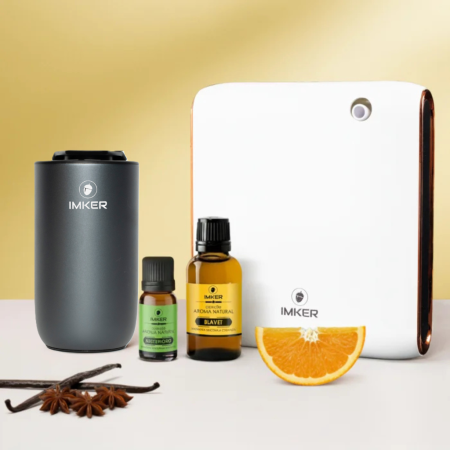
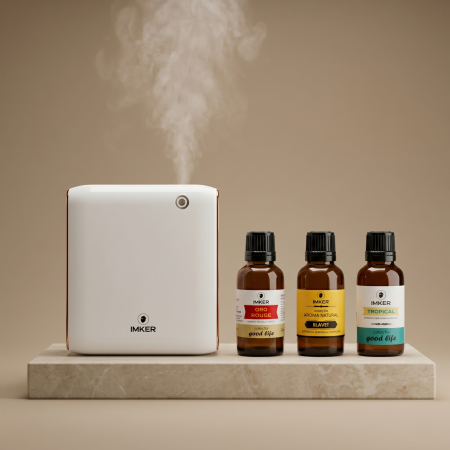
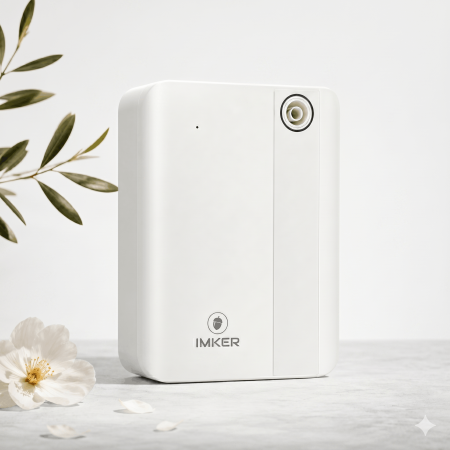
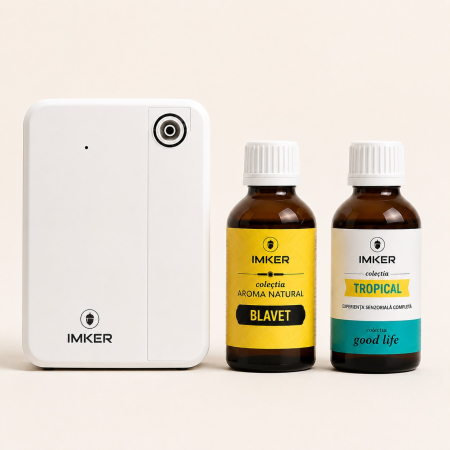
IMKER offers professional fragrance solutions for commercial spaces, combining business fragrance machines with dedicated ambient fragrances. The right professional air freshener should be selected according to the size, layout and specific requirements of the space.
To choose the right fragrance, it is also useful to understand how we perceive scents. You can explore the subject further in the IMKER article about the biology of smell and how we perceive fragrances.
Premium fragrance or ambient fragrance?
A premium fragrance for an interior does not necessarily have to be intense. In a professional environment, the quality of the experience is often connected to balance, persistence and even distribution.For example, a hotel reception may benefit from an elegant and subtle fragrance, while a fitness center may call for a fresher olfactory profile. In a relaxation area, clean, floral, citrus or woody notes can complement the aesthetic direction of the interior.
For spaces looking to create a coherent sensory experience, IMKER ambient fragrances and professional fragrance solutions can be integrated into the overall sensory design.
How do you choose a professional air freshener for a wellness space?
Choosing a professional air freshener should begin with an assessment of the space rather than with the fragrance itself. Floor area, ceiling height, layout, ventilation, traffic and type of activity all influence how a scent is distributed and perceived.
1. Calculate the area that needs to be fragranced
Not every space has the same fragrance requirements. A 50 m² reception, a 300 m² showroom and a hotel with multiple areas will require different configurations.2. Consider air circulation
Ventilation and airflow influence fragrance distribution. A professional air freshener installed in an unsuitable location may create a stronger concentration in one area and a weaker perception in another.3. Choose the appropriate intensity
In a wellness environment, more fragrance does not automatically mean a better experience. Intensity should be adjusted according to the size of the space, its purpose and the amount of time customers spend there.4. Choose the fragrance profile
Citrus notes can create a fresh impression, floral notes can support a delicate atmosphere, while woody accords can create a more sophisticated direction. The most important factor is that the fragrance fits the interior design and identity of the space.5. Set an operating schedule
A professional air freshener allows better control over when and how fragrance is released. The schedule can be adapted to opening hours and periods with higher customer traffic.How can IMKER be integrated into a premium wellness space?
IMKER can be integrated into commercial environments where the customer experience includes a sensory component: hotels, reception areas, spas, clinics, gyms, showrooms, restaurants and premium offices.
Business fragrance machines are designed for commercial fragrance distribution, while ambient fragrances can be selected according to the desired atmosphere. Instead of relying on several independent fragrance sources, a professional air freshener can help create a more controlled and coherent fragrance experience.
For a wellness brand, this approach can become part of a broader sensory identity. Colors, materials, music, lighting and fragrance can all communicate the same aesthetic direction.
This is particularly relevant in spaces where customers spend more time. In a hotel, for example, fragrance can become part of the experience from the reception area to the relaxation zone. In a wellness club, it can help create recognizable atmospheres across different areas.
What is the difference between a wellness spa and a wellness club?
A wellness spa is generally focused on treatments, relaxation and services dedicated to well-being, while a wellness club can integrate these services into a broader concept that also includes fitness and other facilities. The exact difference depends on the business model and services offered by each location.
In practice, the two concepts can overlap. A spa can have a fitness area, while a wellness club can include massages, saunas or body treatments.
For customers, the important difference is the experience provided: how many services are available, how easily they can be combined and how consistently the entire space is designed.
How do you create a coherent wellness experience?
A coherent wellness environment is not about adding as many premium elements as possible. It is about choosing elements that work together and support the same experience.
Ambient fragrance, for example, should complement the interior design and the activity taking place in the space. A very intense scent may be unsuitable for a relaxation area, while a fragrance that is too subtle may be difficult to perceive in a busy commercial environment.
A sensory experience can be developed by starting with three simple questions:
- What should customers feel when they enter?
- What atmosphere should the space communicate?
- Which elements can support the same identity?